
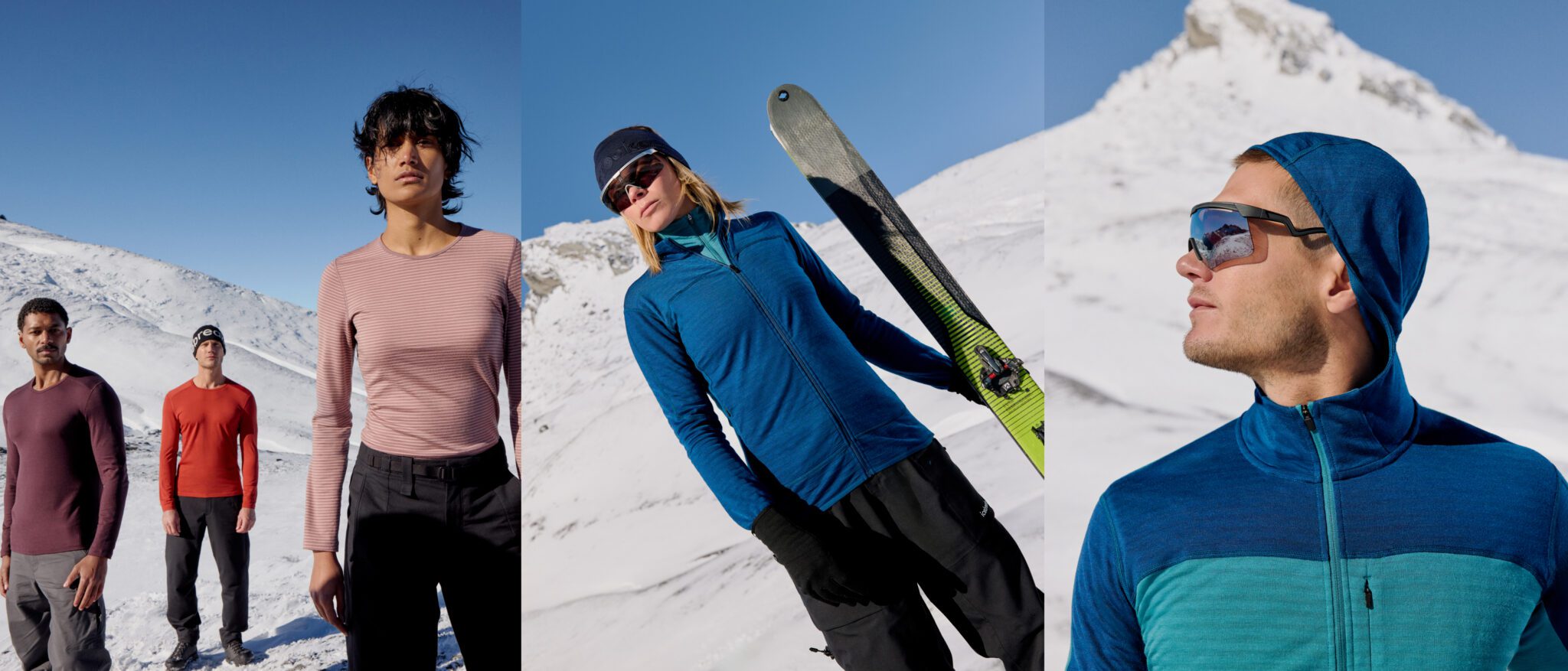
Over the course of a day heli-skiing, you’re doing a lot.
You’re ripping turns in deep snow, coming to a standstill at the bottom of the line, then hopping in a warm helicopter. And the sun could be blazing or a winter blizzard could be raging with howling winds.
Repeat that loop a dozen times in a day.
Repeat it for a week.
That’s asking a lot of your gear. In particular, the gear closest to your body: your base layers, which do the quiet, unglamorous work of keeping sweat, smell and temperature swings from hijacking your trip.
On that front, merino wool, a soft, lightweight, and durable natural fiber from Merino sheep, beats out all contenders as the optimal choice for base layers.
If merino is the go-to material for layering on a heli-skiing trip, the obvious question is how does one go about actually layering?
“Merino’s great for heli-skiing because it wicks moisture and has antimicrobial properties,” Graeme says. “That really matters on multi-day heli-skiing trips.”
Why heli-skiing is a layering sport
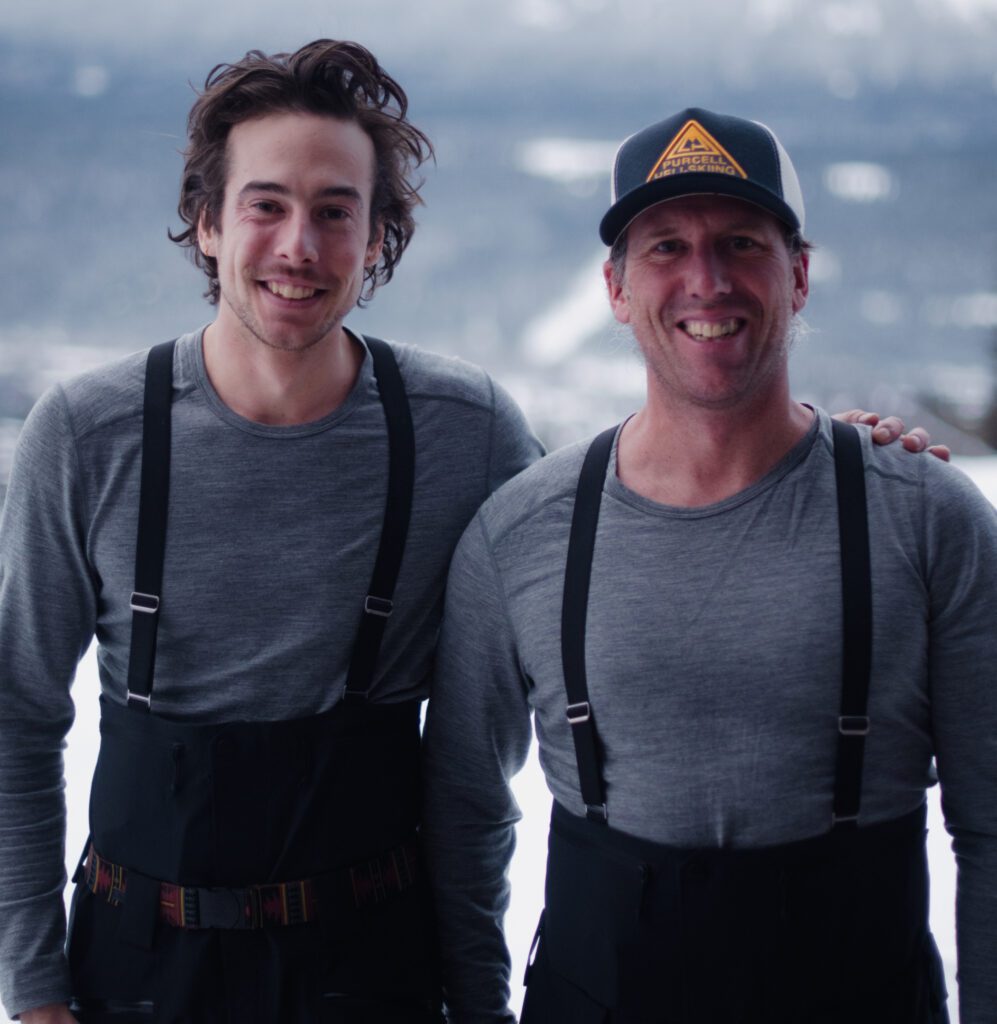
A good question, indeed, and with that in mind, we asked our Assistant Manager of Retail Services, Graeme McIsaac, how to layer for heli-skiing. Given that he picks the products sold in CMH lodges, he knows a thing or five about what to wear when you’re hopping in the heli.
“You want to dress in layers, starting with your base layers which sit next to your skin. Ideally, opt for merino wool. Merino’s great for heli-skiing because it wicks moisture away from your skin when you’re sweating and insulates you from our Canadian weather.”
So far, merino is ticking a number of heli-skiing-shaped boxes. Regulating temperature and moisture so that you can stay warm and dry from your first run to the day’s final lap? That’s the ticket.
So much so that CMH guides sport icebreaker® merino base layers beneath all of their guiding gear. And if anyone has stress-tested gear in just about every type of weather imaginable, it’s our guiding team. In the case of layering, as it is in skiing and riding, following your guide’s lead is very much recommended.
Why merino base layers work so well for multi-day heli-skiing trips
Speaking of icebreaker® merino, their naturally breathable and moisture-managing apparel does an incredible job moving sweat away from your skin so you stay dry and comfortable.
When you get to the bottom of a bottomless heli-skiing lap, there’s a good chance you’ll have worked up quite a sweat. With a merino base layer, all that sweat gets moved away from your body, keeping you warm and dry during your day.
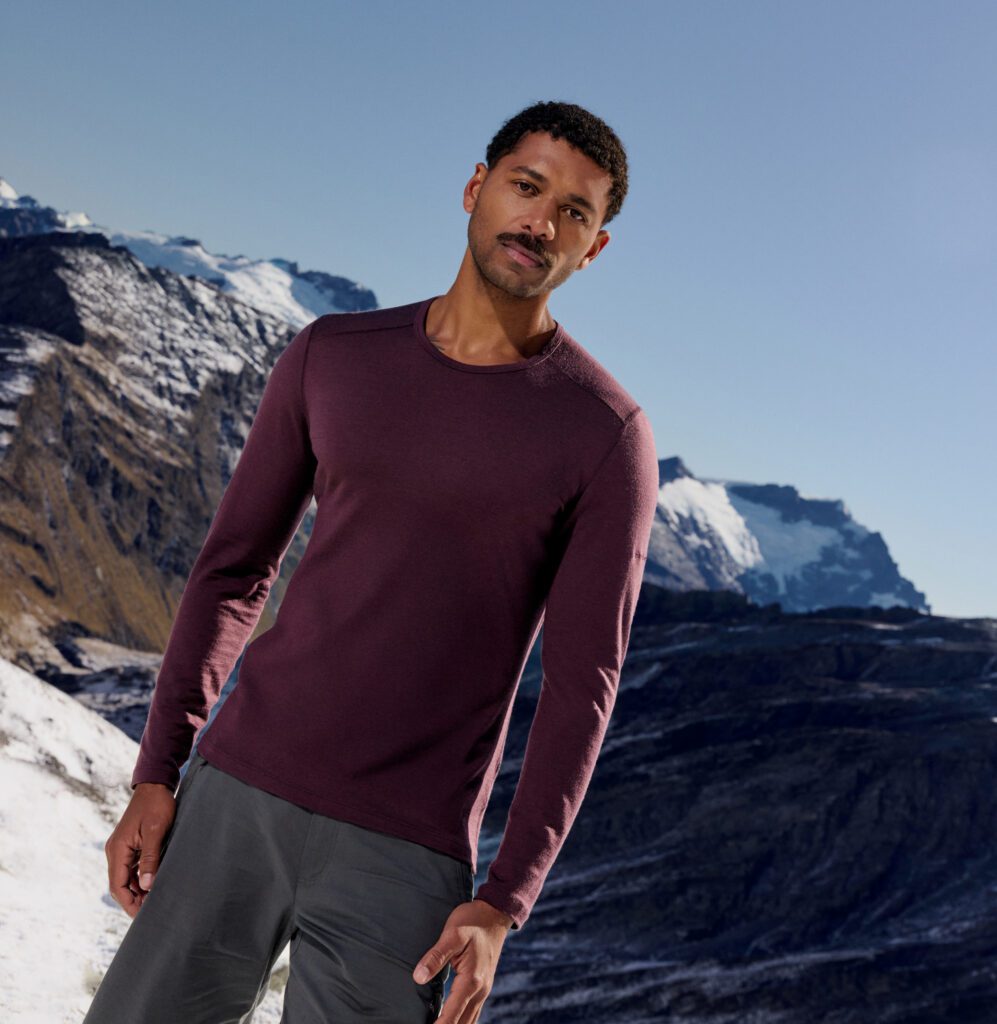
icebreaker® layers offer lightweight insulation without bulk. You can move freely, which is key when you’re getting in and out of helicopters and smashing deep turns all day long. But there’s more.
Another important factor to consider when you’re layering is how well your layer manages odours. That might not be a concern on day one or two, but later in your week, after many thousands of meters skiing and riding, you (and your roommate) will be thanking your lucky stars for your icebreaker® merino base layers.
READ MORE: icebreaker® base layers
“Merino wool fibres have antimicrobial properties, making them odour-resistant. That means you can get extended wear between washes, which perfectly fits the bill for a heli-skiing trip,” Graeme tells us.
In other words? icebreaker® merino lets you put your whole focus on skiing, riding and all the easygoing good times back at the lodge.
The “perfect kit” for heli-skiing (according to Graeme)
Being one of the people tasked with stocking CMH stores with proper heli-skiing products, Graeme knows a thing or two about how best to dress for this sport. Here are his tips on how to layer up for your next heli-skiing adventure.
1) Start with midweight merino
The icebreaker® Oasis 200 is his baseline. It’s warm enough for winter, breathable enough for skiing deep snow and riding in helicopters. And it’s built for day-after-day comfort.
2) Add a mid-layer that can pull double duty
A great mid-layer has two jobs: it works with your base layer to manage moisture and an outer layer to protect against the flying snow, screaming winds and whatever else Mother Nature throws your way.
READ MORE: icebreaker® mid layers
And because they come in several nice colours and designs, icebreaker® mid layers are versatile enough to perform in the mountains and be worn around the lodge (yes, even to dinner!)
3) Keep one extra option in your pack
Some days are colder. Some days you run hot. Having a “third piece” you can add or drop without drama is part of the game.
What icebreaker® merino CMH retail shops stock (and why)
Graeme keeps the CMH selection intentionally focused on pieces that fit the realities of heli-skiing.
CMH shops carry the Oasis 200 base layer lineup in men’s and women’s fits, including crew tops, half zips and 3/4 leggings. It’s made from 100% merino wool jersey fabric, designed for next-to-skin softness and maximum movement.
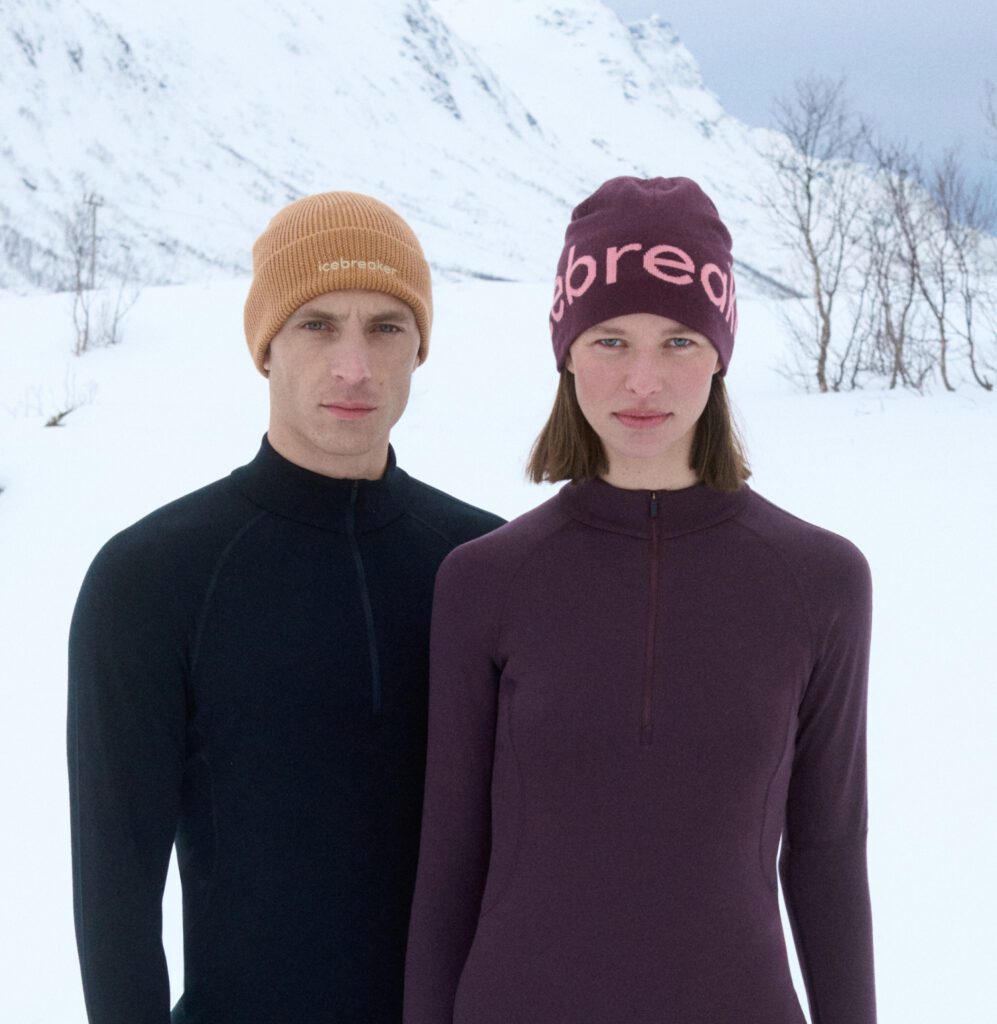
“Not too heavy and not too light, making it a staple for the layering performance you need while you’re out in the backcountry.”
A small but thoughtful detail for heli-skiers: icebreaker®’s 3/4 leggings play perfectly with ski boots and ski socks so you can avoid bunching at the cuff.
Where to get icebreaker® merino at CMH
You’ll find the icebreaker® Oasis 200 products at all CMH retail shops, complete with CMH branding to commemorate some of the best turns of your life.
“We know our guests love products with our logo to remember their trips and show off to their friends, so adding that to the colourways and designs icebreaker® puts together is a real treat.”
The bottom line
The best base layer is the one you forget about. It does its job quietly and effectively while you chase the fluffy white powder that makes the Canadian West famous. Icebreaker® merino helps regulate temperature, manage moisture and stay fresh through multi-day wear. And thanks to Graeme’s insight, you can move from “What to wear?” to “When to go?”
In this story
Comments